As I mentioned in the first entry in this development journey, I am a developer.
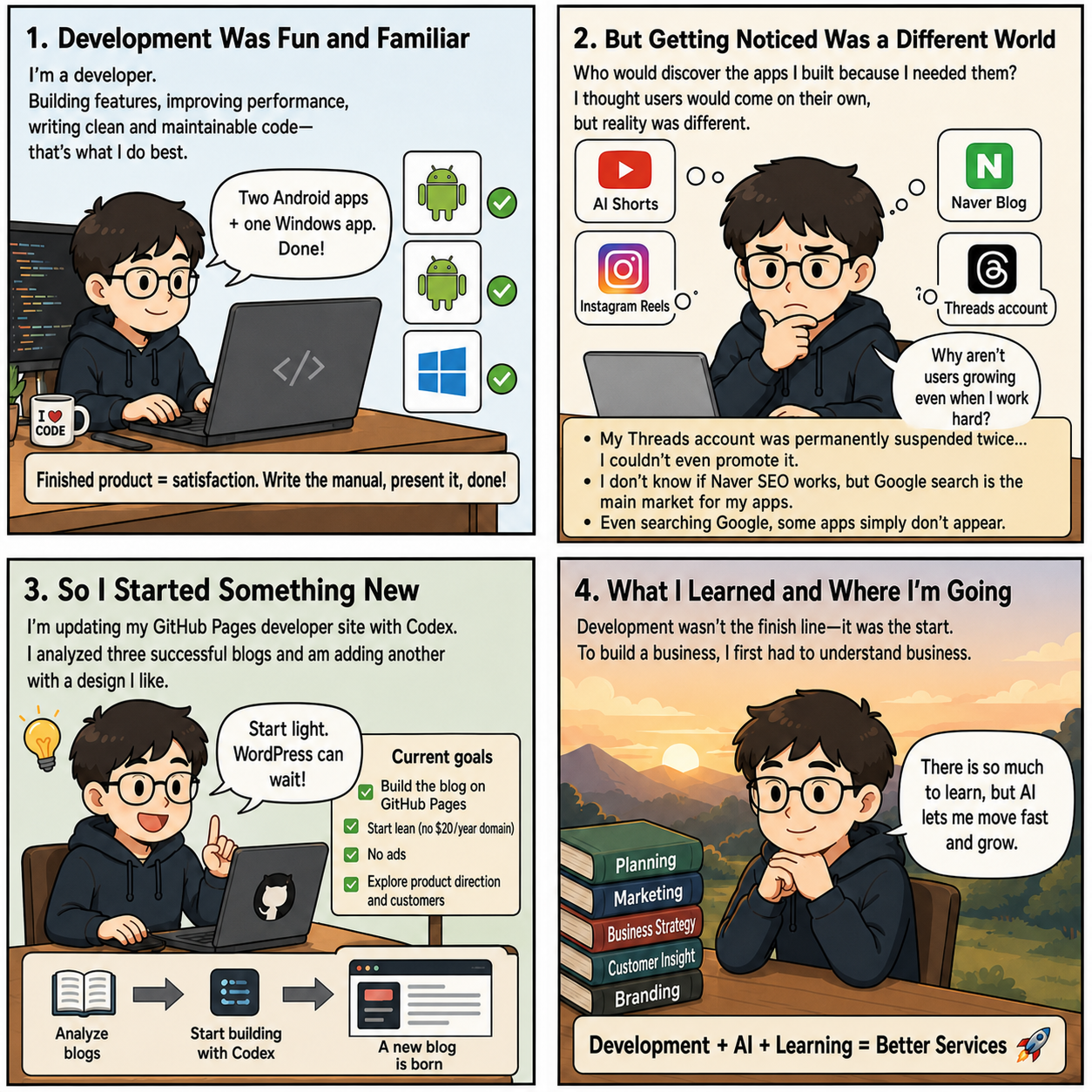
I am used to building the features I want, thinking about better performance, and writing clean, robust code that is easy to maintain. With Claude Code and Codex, I had fun creating two Android apps and a Windows program.
As a developer, I would usually have been satisfied at that point. If I put in a little more effort, I might write a friendly user manual or introduce a new feature at a seminar or user meeting. That was about it.
The Other World I Found After Development
But telling other people about the self-sufficient apps I had built for my own needs was an entirely different world.
A month or two later, my expectation that I would quickly attract hundreds or thousands of users had completely disappeared. Instead, I found myself wrestling with questions like these:
- How can I get these apps in front of the public?
- Who actually needs them?
- How should I market and promote them from a business perspective?
Following AI’s suggestions, I made AI-generated short videos and shared them as Instagram Reels. I am now comfortable creating short-form videos with GPT Image and Google Flow and editing them in CapCut.
Even so, the user base did not grow easily. Because I was targeting the Korean market first, I opened a Naver Blog and started writing. After all, when I need to find something in Korea, I still search Naver or browse Naver Cafes myself.
Promotion Was Another Series of Trials and Errors
I offer every app and program I have built for free because I still do not have a clear business model, but users have not come easily. I also created a Threads account as another way to promote them.
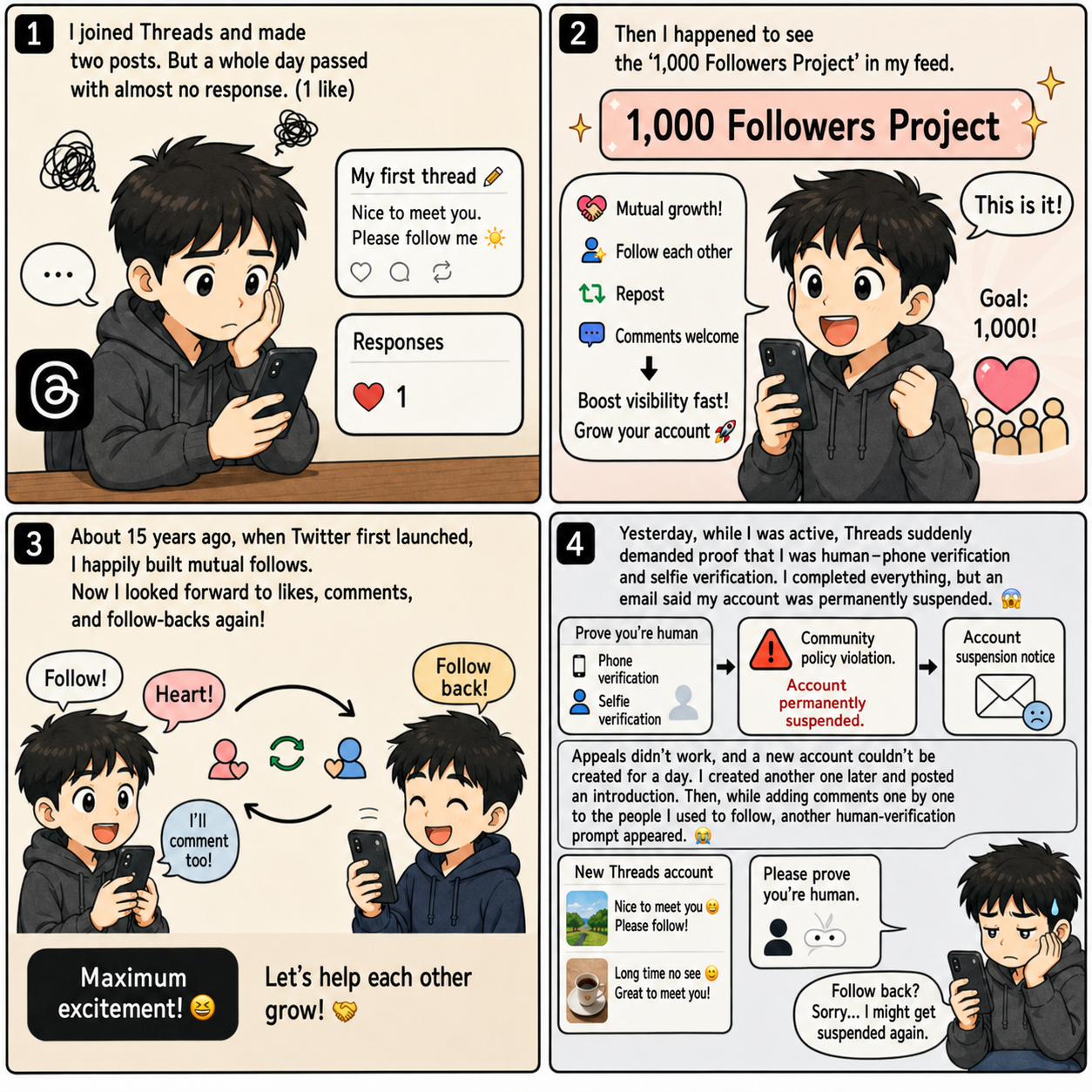
Threads, however, was extremely sensitive to activity that appeared to be advertising or AI-driven. In the end, my account was permanently suspended twice. I was stopped while trying to grow my follower count before I had even managed to promote anything properly. I wrote about that experience in an earlier post.
Rebuilding My GitHub Pages Site for Global Search
Naver Blog may perform well in Naver Search, but the real market for my apps and services is global. When I search Google for apps like mine, some of them do not appear at all.
That is why I am using Codex to update my existing GitHub Pages site, which originally served as both my developer page and app showcase.
First, I asked Codex to recommend three representative sites that successfully run blogs on GitHub Pages. After analyzing them and finding a theme I liked, I began adding a blog to my existing site. Or, to be precise, Codex began doing the work.
If you are curious about what kind of blog Codex can build on GitHub Pages, take a look at this site. It was created using only the five free hours of GPT Plus usage.
Of course, managing tokens this way requires preparing a web-coder skill and a worker agent based on that skill in advance. I explained the method I used in detail in an earlier post.
I Still Have More Questions Than Answers
I have also learned that WordPress would be much better in many respects for a full-scale blog. But I do not need a full-scale operation yet. For the same reason, I do not plan to register a separate domain, which would cost about $20 a year, for the time being. I do not need Google Ads or other advertising either.
I still have no idea which direction these apps will take or which customers’ problems and needs they will eventually solve.
Only now do I feel that I am beginning to understand business. I am learning the importance of planning, the role of marketing, and even the uncomfortable truth that a feature a developer finds interesting—or adds simply because it can be built—may be completely useless to users.
As I thought through these questions, read books, and searched for YouTubers who had gone through similar experiences, I learned that even reaching 100 app installs is genuinely difficult.
This is probably not just a problem for today’s AI-assisted solo developers. It is closer to the fundamental nature of business—an area I had never needed or wanted to understand before.
In the end, if I want to run a business, I need to understand business. I still have a mountain to learn.
Even so, I feel incredibly fortunate that AI can accelerate not only development but all of these other areas as well, helping me move through trial and error much faster.
A new journey into marketing and business began after development was complete.
#SoloDeveloper #IndieHacker #AppDevelopment #AndroidDevelopment #Developer #DeveloperBlog #AIDevelopment #AIForDevelopers #ClaudeCode #Codex #GitHubPages #WordPress #SEO #SearchOptimization #AppMarketing #AppPromotion #Startup #Entrepreneurship #SideProject #ProductBuilding #MVP #DeveloperJournal #ServiceDevelopment #BusinessLearning #DeveloperFounder #SoloFounder #AppLaunch #DevelopmentJourney